The Husband
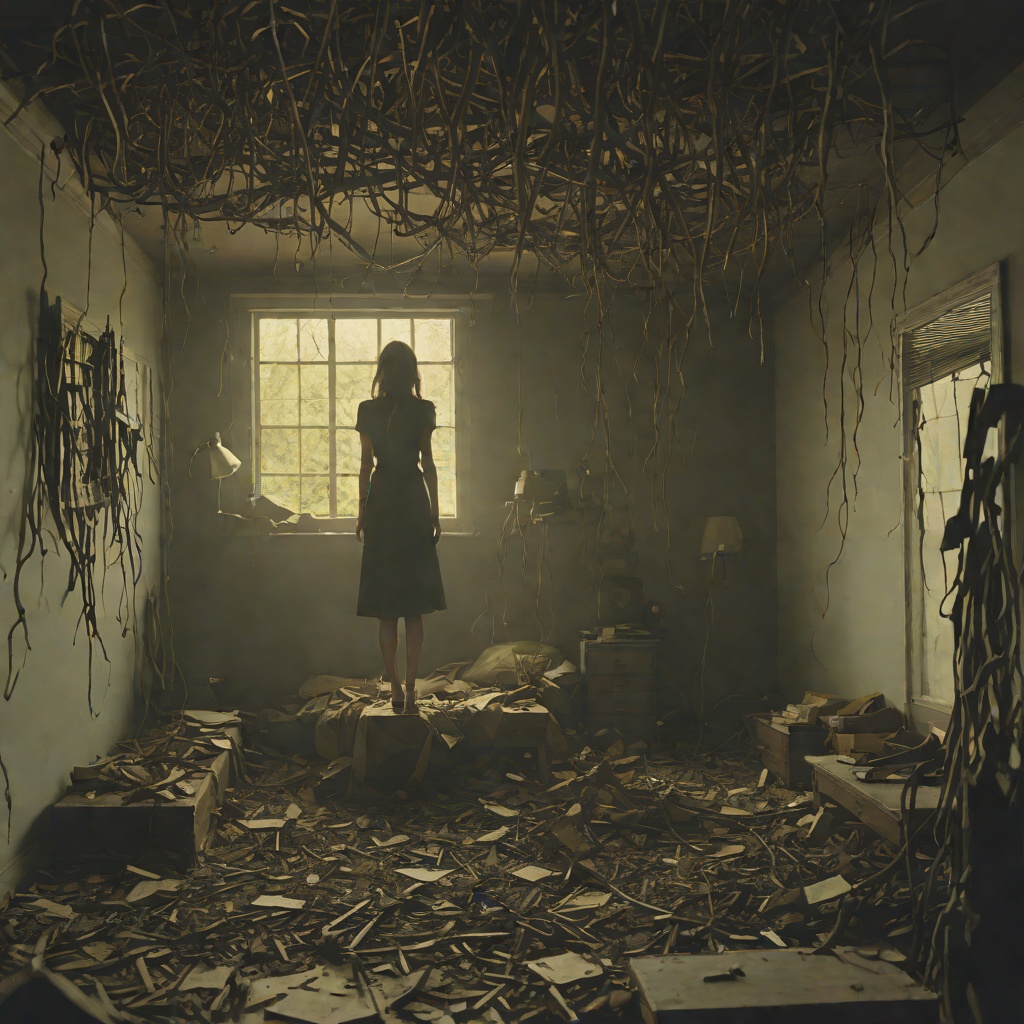
Die, My LoveThe Husband is the Narrator’s partner, the father of The Son, and the domestic figure against whom the novel measures the limits of ordinary family life. He tries to sustain a recognizable household through work, childcare, meals, outings, affection, and conversation, yet his practical normality cannot contain the Narrator’s suicidal thoughts, maternal ambivalence, rage, and estrangement. His significance lies in this contradiction: he is neither simply a cruel antagonist nor an adequate saviour, but the man whose gestures toward family repeatedly become evidence of the distance separating him from his wife.
Identity and Domestic Role
The Husband lives with The Narrator and The Son in a rural house that was once a dairy farm. He works as a travelling salesman, returning with a suitcase of unsold products and samples and showing The Narrator four thousand in ten-unit notes. His economic activity gives the household a mundane material structure, while his domestic habits reveal a strong investment in recognizable family rituals. He heats a second dinner, watches cartoons to switch off, carries out rubbish, cleans broken glass, and tries to organize the evening even when the marriage has become almost uninhabitable.
He is also a father whose relationship with The Son is visible through ordinary physical care. He plays naked with the child in the paddling pool, helps stage the first birthday celebration, and later prepares him for a trip to the sea with sunscreen, packed lunches, a thermos, and jackets. He is excited by the child’s first entrance into the water and asks that the precise moment be filmed. These preparations make him appear, for several miles, to inhabit the ideal of the normal family: mother, father, and son travelling together with practical supplies and shared anticipation.
Habits, Care, and the Open World
The Husband is repeatedly drawn outside. He dislikes urinating indoors, seeks blue skies and cloudless weather, smokes beneath the open air, and brings The Narrator out to look at stars with a telescope. Astronomy gives him a language of wonder that he assumes can be shared. He points out constellations, meteors, the Great Bear, the Little Bear, and the moon’s craters, treating the sky as a source of orientation and vitality. He describes the stars as huge masses despite their tiny appearance and imagines crossing from one to another as across a precarious bridge.
The Narrator cannot accept this invitation into shared wonder. The Husband’s enthusiasm makes her feel more isolated, not less, because she sees the stars as illusions and black objects in the sky rather than as consoling signs. His attempt to connect through the telescope therefore becomes a study in failed intimacy. He wants the heavens to make him feel alive; she is preoccupied with darkness, the crying child, and the possibility of injuring herself. Even when he embraces her, the physical contact registers as an event made strange by its rarity: they have gone months without hugging or holding hands.
His care is practical but often blunt. When The Son cries, he asks what the child wants and tells The Narrator that, as his mother, she should know. He repeats the social expectation that maternal knowledge ought to be instinctive, while she answers that she has no idea. His frustration is not merely verbal. He becomes angry when she remains seated amid broken glass and fails to attend to the dog, objects to her undone trousers, and criticizes the state of the house. Yet he also sweeps the glass while trying not to hurt her, nudging the dog away with his foot. The same scene thus joins reproach and care: he sees disorder as a problem to be corrected, whereas The Narrator experiences the household as something already disintegrated.
Conflict Within the Marriage
The Husband’s relationship with The Narrator is marked by physical closeness that has not produced emotional security. She recalls sex with him as the cause of her pregnancy and imagines the alternative of having closed her legs or seized his penis. During the child’s six-month celebration, the cream cake, chocolate cake, candles, and family portrait are contaminated by her memory of conception. The Husband’s domestic happiness therefore carries an accusation he cannot hear.
He nevertheless tries to maintain the language of love. He calls her over for a beer, asks whether she wants a blonde or dark beer, kisses her without tongue, and participates in a toast to The Son’s happiness. The Narrator recognizes that they mechanize the word love, using it even when they despise each other. His affectionate routines are consequently double-edged: they preserve the appearance of marriage while demonstrating how completely its language has become automatic.
The Husband’s anger intensifies as The Narrator’s conduct grows more alarming. He insults the moon, women, and her, but the narration notes that the most aggressive thing he has said to her in seven years is a demand that she get herself checked out. Her own remembered threat that he was a dead man belongs to the first month of their relationship, establishing that hostility existed before the crisis became explicit. He is frightened and exasperated, yet he does not initially respond with spectacular violence. Instead, he complains, withdraws, smokes, drives away, and attempts to force a conversation.
The drive after the ruined dinner makes this pattern concrete. The Husband starts the car and waits while The Narrator sits motionless, understanding the running engine as an ultimatum. He insists that they need to talk and says that things cannot continue as they are. The dog occupies The Son’s car seat, the early-morning mist covers roofs, stables, wineries, milking yards, and churches, and The Husband turns up The Smiths on the radio. His distracted singing and the rural scenery briefly create a shared excursion, but the journey becomes dangerous when a stag strikes the windscreen. The accident turns the family car, normally a vehicle of routine, into a site where animal force and marital crisis collide.
Separation and the Final Agreement
The decisive rupture begins when The Husband tells The Narrator to come and sit down. The phrase is presented as a sentence whose finality she immediately understands. He has apparently decided that the marriage must end and wants to discuss the practical consequences: the time they will spend at the table, whether they will cry, how they will divide their belongings, what will happen with joint custody, and whether The Son might be taken by one parent or become the subject of legal proceedings and child-support litigation.
The Narrator’s response is bodily rather than deliberative. She experiences pain in her sex, imagines transforming herself into an old, repulsive woman who would require care, and then vomits the ten years of their marriage over the table, chair, and sofa. The Husband is left unable to decide whether to clean, embrace her, call an ambulance, or have her committed to the psychiatric institution. His uncertainty shows both the limits and the seriousness of his responsibility: he is confronting a person in crisis while also being forced to acknowledge that the domestic arrangement itself has collapsed.
Later, after The Narrator’s return and the trip to the sea, the couple briefly perform normality again. They pass toll booths and police checkpoints, sing along to an eighties song, squeeze each other’s shoulders, and travel south in a four-wheel drive borrowed from a concerned uncle. At the beach they become, for several miles of road and a short interval on the sand, a typical family. But the apparent restoration is temporary. The Husband eventually meets The Radiologist to settle the future, and the two men stand apart from the women, first seeming ready for a duel and then moving toward an agreement through gestures rather than words.
The Husband is the one who returns to The Narrator after that agreement. His cough identifies him before speech does, and they drive home in silence. He tells her that The Son is no longer a baby, a statement whose deeper meaning she understands as the loss of her former claim on him. The Husband then drives into the woods, where he asks what she wants to do. The question surprises her because she expects a verdict rather than participation in a decision. He says he will not be able to forget, and the disclosure that The Radiologist and his wife are expecting twins produces an unexpected final bout of shared laughter. They even imagine, absurdly, having another child themselves, though the question sends him into a coughing fit.
Narrative Function and Significance
The Husband embodies the social script that The Narrator cannot inhabit without feeling imprisoned by it. He organizes birthdays, meals, transport, childcare, work, holidays, and the family trip to the sea; she sees these same structures as mechanical performances that conceal disgust and despair. His repeated attempts to restore routine are therefore not empty, but they are structurally incapable of answering the crisis. He can offer a beer, a telescope, a car ride, a packed lunch, or a conversation, yet none of these objects or actions can translate the experience she refuses or cannot translate into ordinary language.
His presence also makes the novel’s distinction between family appearance and emotional reality painfully visible. In public and in photographs, he is the father in a functioning household. In private, he is a man smoking outside, asking why The Son will not stop crying, criticizing The Narrator’s failures, and discovering that the person beside him may be suicidal and beyond his control. The final separation does not turn him into a villain or a romantic victor. It leaves him as the loyal one who returns to the car, drives through the rain, and shares one last laugh with The Narrator before she disappears into the undergrowth. That restraint gives the ending its bleak force: the marriage ends not with a definitive explanation, but with two people recognizing that ordinary love, however diligently performed, can no longer keep them together.